Ziidi Trader: Financial Freedom or Predatory Tech from Safaricom?
Show notes
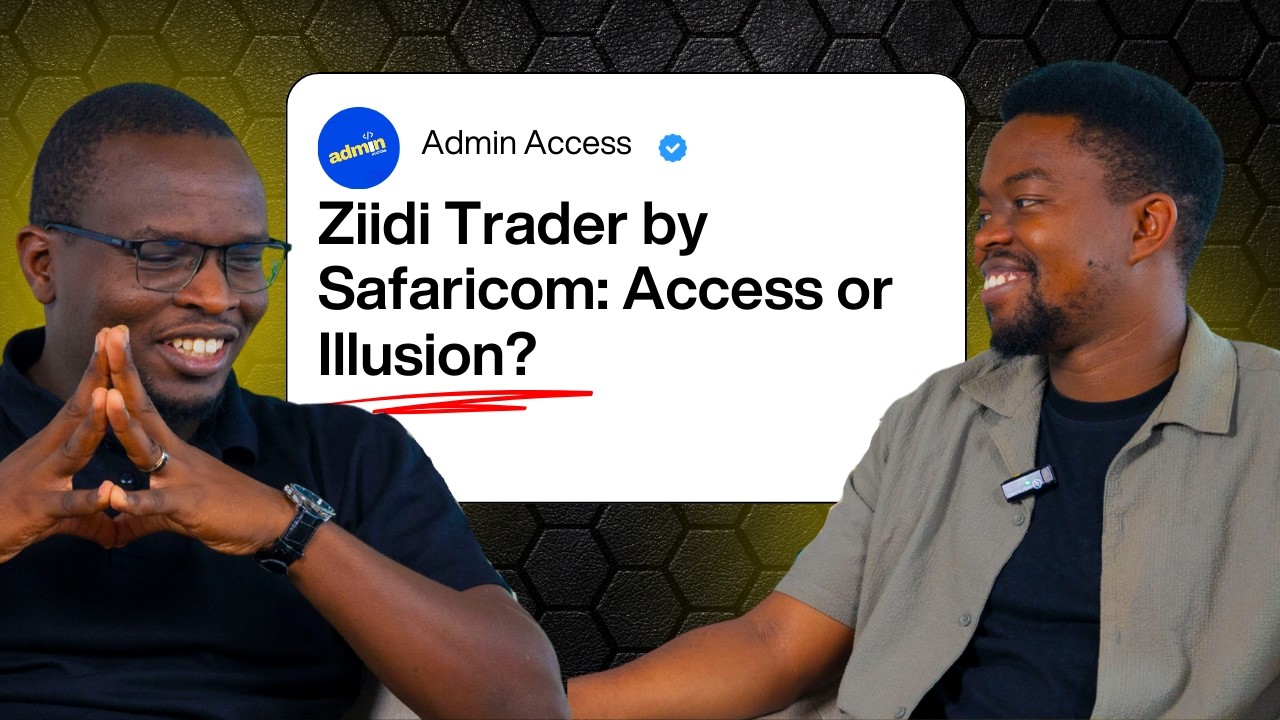
On this episode of Admin Access, Dominic and Evans dive deep into one of the most talked-about developments in Kenya's financial landscape, the arrival of Ziidi Trader, Safaricom's new stock trading feature embedded within M-Pesa, and what it really means for the everyday Kenyan investor. Kenya's retail investing scene has historically been a ghost town with only around 61,000 active traders in a country of 55 million people, and 97% of registered CDS accounts sitting completely dormant. A combination of bureaucratic red tape, high minimum investments, steep broker fees, and the painful memory of the 2006-2008 IPO boom that left many Kenyans burned, kept the ordinary person locked out of the market for decades. Then Ziidi Trader arrived and daily trades on the Nairobi Securities Exchange quadrupled almost overnight. The promise? 40 million M-Pesa users now have a direct gateway into the stock market. On paper, it sounds like a revolution. The hosts pull back the curtain and ask the harder questions. When you buy a share on Ziidi Trader, do you actually own it? Then there's the cost conversation. While Ziidi Trader charges less than traditional brokers, a 1.5% fee in each direction means a 3% round trip on every trade, in a market where even strong stocks average around 7% annual gains. Compare that to India's Zerodha or America's Robinhood, where zero-commission trading has genuinely shifted wealth participation, and Kenya still has a long road ahead. The bigger picture the boys are painting is this: Ziidi Trader may be less of a public utility and more of a masterclass in Safaricom building Africa's most powerful financial walled garden, controlling the payment rails, the app, and the brokerage in one closed loop. The episode wraps up with the hosts asking three questions every Kenyan investor must sit with before opening that Ziidi Trader app. First, are you investing or are you trading? Second, do you truly understand the real cost beyond the advertised fee? Third and finally, if the odds are stacked against day traders even in markets with better regulation and greater transparency, what makes you the exception? Useful Links: Kenya Capital Market potential :https://ke.andersen.com/news/unlocking-kenyas-capital-markets-potential/ Safaricom's Ziidi :https://kenyanwallstreet.com/safaricom-bets-on-ziidi-trader-to-turbocharge-stock-trading NSE shares Quadruple :https://www.businessdailyafrica.com/bd/markets/capital-markets/nse-share-orders-quadruple-on-m-pesa-trading Robinhood's Securities Violation:https://www.jdsupra.com/legalnews/game-over-robinhood-pays-7-5-million-to-3618806/ Inside India's Investment Transformation :https://economictimes.indiatimes.com/markets/stocks/news/20-crore-demat-accounts-and-counting-inside-indias-retail-investing-transformation/articleshow/
In this episode
- 00:00Introduction
- 01:06The Periodic Table of Assets Meme
- 02:30What is Ziidi Trader & Why It Matters
- 04:21Kenya's Retail Investment Desert
- 09:10The 2006–2008 IPO Boom & The Safaricom IPO Story
- 11:33Kenya vs The World: Participation Rate Comparisons
- 16:55Do You Actually Own Your Shares on Ziidi
- 19:34Is Ziidi Trader Actually Cheap? Breaking Down The Real Costs
- 25:55Safaricom's Walled Garden: Democratization or Strategic Annexation?
- 26:52Global Playbook: Robinhood, Zerodha & The Open Protocol Argument
- 33:33Will Ziidi Trader Drive More Local Company Listings?
- 36:00The Cultural Shift: Are Kenyans Ready to Think Like Investors?
- 36:53Three Questions Every Kenyan Investor Must Ask Themselves