SpaceX, Reusable Rockets & the Moon Economy: What You Need to Know
Show notes
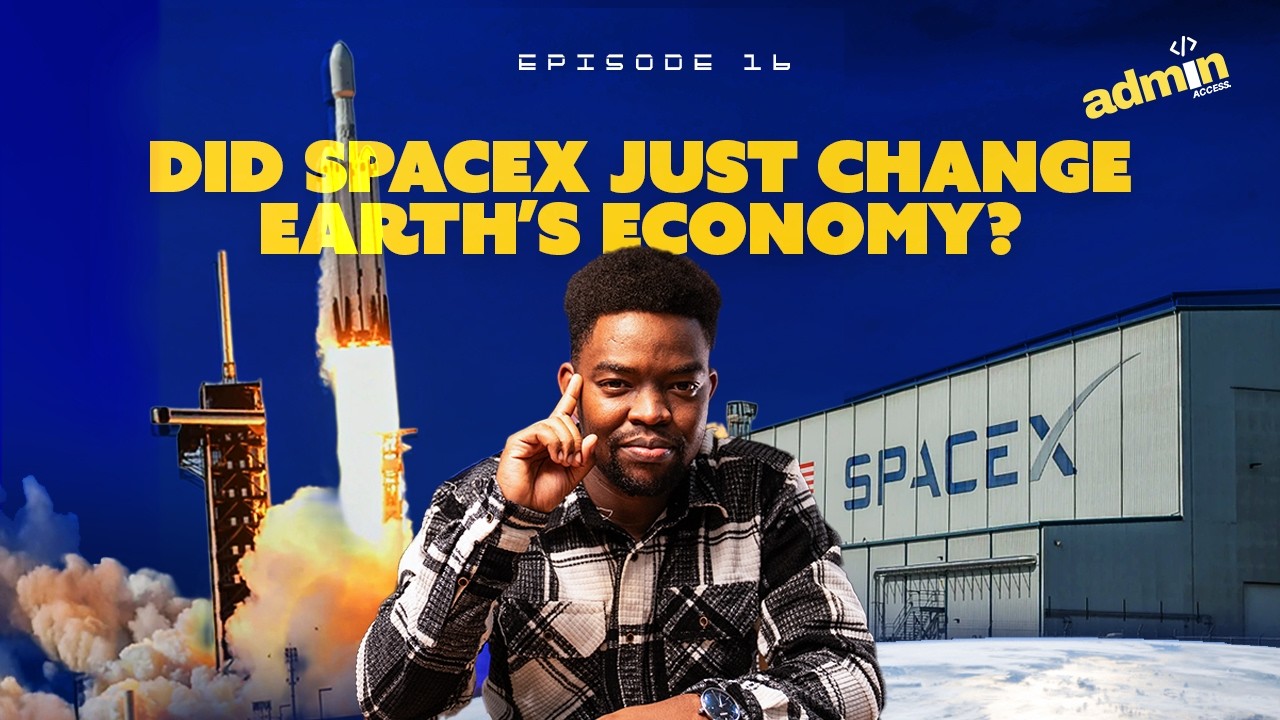
On this episode of Admin Access, Dominic takes the reins to explore something that doesn't get nearly enough attention in tech circles: the revolutionary transformation happening in space exploration and why it matters for Africa and the developing world. The conversation kicks off with a confession, watching a SpaceX booster land for the first time literally made his mind reboot. Until that moment, rockets were fancy disposable lighters, sparked once and tossed into the ocean. SpaceX changed everything by solving space's most boring problem: the price tag. He traces the arc from Sputnik's terrifying beeps in 1957 to today's economic-driven competition for orbital real estate. After NASA planted the flag on the moon, the world took a 40-year nap because getting to orbit cost a staggering $10,000 per kilogram. Enter SpaceX and reusable rockets. By bringing that cost down to around $1,300 per kilogram, a 10x improvement, they didn't just make space cheaper; they turned it into a logistics problem instead of a national prestige project. He compares this breakthrough to shipping containers revolutionizing global trade, calling reusable rockets "the containers of space." But here's where it gets strategic: the most valuable parts of space are surprisingly limited. Think of Low Earth Orbit (LEO) as prime downtown real estate, where Starlink grabbed the best spots by moving fast. Geosynchronous orbit (GEO) sits higher up, like a permanent rooftop camera that never moves. And the moon? It's becoming the ultimate gas station, with frozen water that can be turned into rocket fuel. The episode wraps up with Dominic addressing Africa's glaring absence from this race. and what happens when we wake up to find all the good parking spots already taken? The new space race isn't about flags and photo ops; it's about supply chains, strategic positioning, and economic advantage. And with SpaceX's Starship now capable of moving massive payloads, building lunar bases isn't science fiction anymore; it's logistics, infrastructure, and economics.
In this episode
- 00:00Intro
- 02:08The SpaceX Mind Reboot Moment
- 03:45The Original Space Race: Sputnik to Apollo
- 07:53The Economics Problem
- 11:11Elon Musk & SpaceX
- 12:23Reusable Rockets: The Game Changer
- 15:18The Shipping Container Analogy
- 17:12Space Real Estate: Why Orbit Matters
- 18:46Low Earth Orbit (LEO): Downtown Space
- 20:30Starlink & the First-Mover Advantage
- 22:29What Makes LEO So Valuable
- 24:12Military Implications & Communication Control
- 25:24Geosynchronous Orbit (GEO): The Penthouse View
- 27:51The Moon
- 30:31Africa's Wake-Up Call
- 31:36Starship & The Future